
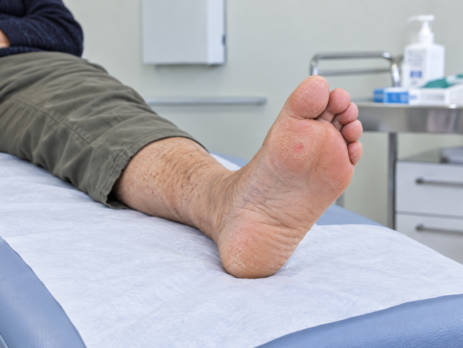
Diabetes mellitus is one of the most prevalent chronic metabolic disorders worldwide, affecting millions of people. One of the most serious, persistent and potentially life-threatening complications of this disease is the diabetic foot. It is a condition of the lower extremities that results from the combination of peripheral neuropathy and peripheral arteriosclerosis, making the extremities extremely vulnerable to injury, infection and tissue necrosis. Early recognition of symptoms and care are critical factors in preventing irreversible damage.
How is diabetic foot caused?
Diabetic foot describes a wide range of abnormalities that develop in the lower extremities of a person with diabetes, ranging from dryness or hyperkeratosis to deep ulcers or gangrene. The pathophysiology of the disease is based primarily on two interrelated factors: diabetic neuropathy and angiopathy.
- Diabetic neuropathy leads to gradual destruction of peripheral nerves. This results in the loss of protective sensation, which means that the patient ceases to feel pain, temperature or pressure. A small pebble in the shoe, a tight shoe or a burn from hot water can create a wound without being noticed.
- Peripheral angiopathy (arteriosclerosis) causes narrowing or complete blockage of the arteries that supply oxygen and nutrients to the lower extremities. The resulting ischemia prevents normal healing and reduces the tissue's defense against microbes.
- Foot deformities, such as hammertoes or arch collapse, are caused by motor neuropathy, creating abnormal points of increased pressure on the sole.
When these mechanisms combine, even a seemingly insignificant microtrauma can rapidly develop into a resistant ulcer.
What are the symptoms that require immediate evaluation?
The diabetic foot often begins with mild, almost imperceptible symptoms, which, however, indicate underlying damage to the vessels or nerves.
- Numbness, tingling or burning sensation in the feet and toes, especially at night.
- Reduction or complete loss of sensation of touch, pain or temperature changes.
- Change in skin color, such as intense redness, pallor, or cyanosis (black color in the fingers).
- Coldness of the skin in the lower extremities, which does not subside easily and indicates insufficient blood circulation.
- Presence of cracks, calluses or blisters that do not heal within a few days.
- Nail changes, such as thickening, brittleness or ingrowth of the nail into the skin.
- Fluid, pus, or foul odor from any part of the foot is an indication of an active microbial infection.
- Swelling (edema) in the ankle or foot, which may be accompanied by a local increase in temperature.
The appearance of any of the above symptoms necessitates immediate medical evaluation, as delay dramatically increases the risk of serious progression.
Diabetic foot prevention and daily care
Studies show that proper and systematic education of the sufferer can reduce the risk of ulcers and amputations by up to 85%. The daily care routine should include simple but strict hygiene rules:
- Daily visual inspection of the entire foot, including the sole and interdigital spaces.
- Washing feet daily with lukewarm water and neutral soap.
- Very good and thorough drying, especially between the toes, with gentle patting movements of a soft towel to prevent the growth of fungi.
- Apply moisturizer to the soles and backs of the feet to prevent cracks, but avoid using cream between the toes.
- Avoid walking barefoot, both outdoors and indoors, even on the beach.
- Careful selection of footwear: shoes should be anatomical, roomy, made of soft leather, without internal seams that cause friction.
- Use cotton or wool socks without tight elastic, which are changed daily.
- Avoid using sharp objects, razors or chemical pads to remove calluses.
Modern therapeutic approaches for the diabetic foot
When an active ulcer occurs, the diabetic foot requires combined and specialized treatment. Modern medicine provides advanced methods aimed at rapid healing and limb salvage.
- Surgical debridement: This is the cornerstone of local care. Necrotic tissue, debris, and bacterial biofilms are removed, allowing healthy granulation tissue to develop.
- Pressure relief: Applying mechanical pressure to an ulcer prevents its healing. Special full-contact casts, braces, therapeutic footwear or specially designed orthotic insoles are used.
- Advanced healing dressings: The application of silver, hydrogel, foam or collagen dressings ensures the appropriate moist environment and limits the microbial load.
- Negative pressure therapy: This is a negative pressure device that removes exudates, reduces swelling and promotes blood flow to the area of the injury.
- Targeted antibiotic therapy: Administered after tissue culture to combat infections that extend to deeper layers or bones.
The importance of vascular assessment and reperfusion
Adequate blood supply is a prerequisite for any wound to heal. Without adequate blood flow, no topical dressing or antibiotic can be effective. For this reason, when examining the diabetic foot, checking the vascular network is of paramount importance.
The diagnosis of arterial insufficiency is made by measuring the ankle-brachial pressure index, triplex ultrasound of the lower limb arteries and, where necessary, by CT, MRI or classical digital angiography. If severe stenosis or occlusion is detected, modern reperfusion techniques are applied:
- Endoluminal techniques: They include balloon angioplasty and stent placement, offering minimally invasive restoration of flow without extensive incisions.
- Open surgeries: They include bypass surgeries using an autologous vein or synthetic graft, bypassing the blocked part of the artery.
Rapid restoration of blood flow transforms the prognosis, preventing necrosis and offering the possibility of definitive healing even in chronic ulcers.
The Vascular Surgeon, Dr. med. Nektarios Galanis, has many years of clinical and surgical experience in the treatment of vascular diseases related to the diabetic foot. Having dealt with a large number of complex vascular surgical cases, he assesses the state of blood circulation and selects the appropriate therapeutic approach for each patient.
The goal is to address the cause of the problem, protect the affected limb, and improve the patient's daily life and quality of life.