
Spider veins: What should I know and what
can I do?
Spider veins are one of the most common cosmetic and medical issues that affect millions of people worldwide, especially women. Although most often they are a simple aesthetic problem, their appearance can in some cases be directly related to the functioning of the venous system. Understanding what they are, how they are created and what modern treatment options are, is the first and most important step towards their effective management.
What are varicose veins and how are they distinguished from varicose veins?
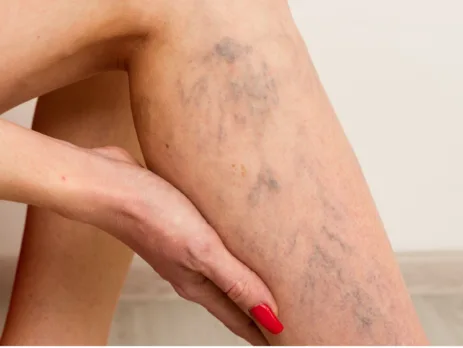
Spider veins, also known as spider veins, are small, dilated blood vessels that are very close to the surface of the skin. They are usually red, blue or purple in color and appear like spider webs or small tree-like branches. Their size is extremely small, as their diameter usually does not exceed 1 millimeter. They are mainly found on the lower extremities (thighs, calves, ankles) but also on the face, especially around the nose and cheeks. It is very important not to confuse spider veins with varicose veins. Although both conditions are related to each other, they have some important differences:
-
- Spider veins develop in the superficial layers of the skin, are flat, and are not palpable.
-
- Varicose veins are larger, swollen veins that protrude from the skin, have a serpentine course, and their diameter exceeds – often by far – 3 millimeters.
Although varicose veins are largely considered a cosmetic problem, their presence in the legs can sometimes be accompanied by bothersome symptoms, such as a feeling of heaviness, burning, itching, or mild pain, especially after prolonged standing.
The main causes and risk factors for their occurrence
The main cause of varicose veins is a genetically determined weakening of the vein walls, resulting in the malfunction of the small valves inside the small superficial veins. Under normal conditions, these valves push blood towards the heart and prevent it from returning downwards. When the valves become weak or damaged, blood backs up and pools in the small vessels. The increased pressure exerted on the vessel walls causes them to dilate, making them visible through the skin as varicose veins.
The scientific community has identified several factors that significantly increase the likelihood of someone developing varicose veins:
-
- Heredity: Genetic background plays the most decisive role. If there are family members with venous problems, the likelihood of developing them increases dramatically.
-
- Gender and Hormonal Changes: Women are affected much more often due to estrogen and progesterone. These hormones relax the walls of the veins. This is why varicose veins often appear during puberty, pregnancy, menopause or with the use of birth control pills.
-
- Age: Over time, the walls of blood vessels and valves lose their natural elasticity, which favors their creation.
-
- Lifestyle and Occupation: Prolonged standing or a sedentary lifestyle reduces the function of the calf muscle pump, increasing venous pressure.
-
- Obesity: Increased body weight puts additional pressure on the venous system of the lower extremities.
-
- Sun Exposure and Injuries: Especially for the facial area, chronic exposure to ultraviolet radiation breaks down collagen and destroys small vessels, creating local varicose veins.
How is the diagnosis made? Triplex veins
The correct treatment always starts with a valid diagnosis. Many people believe that because varicose veins are visible to the naked eye, a simple clinical examination is enough. However, this is a common mistake. The varicose veins that we see on the surface may simply be the “tip of the iceberg”, supplied by deeper veins that are inefficient (feeder veins or reticular veins).
For this reason, the essential examination before any therapeutic intervention is the Triplex ultrasound of the veins of the lower extremities. Triplex allows a complete control of the superficial and deep venous network. Through this examination, it can be determined whether the varicose veins coexist with hidden venous insufficiency or with larger varicose veins that have not yet become apparent.
If treatment is attempted on superficial varicose veins without addressing the deeper venous reflux, the result will be very temporary. The varicose veins will return very quickly at the same or an adjacent site, as the underlying pressure will continue to exist.
Modern and effective treatments for varicose veins
Medical technology has made tremendous progress, now offering solutions that are minimally invasive, painless and do not require hospitalization or recovery time. The two main methods used worldwide to eliminate spider veins are sclerotherapy and laser treatment.
1. Sclerotherapy
Sclerotherapy directly into the damaged vessel. This substance causes controlled irritation to the inner walls of the vein, causing them to stick together and the vessel to close. The body then naturally absorbs the closed vessel and the varicose veins gradually disappear within a few weeks. The procedure is performed in the doctor's office, lasts about 30-45 minutes and is almost painless.
2. Transdermal Laser (Laser Therapy)
The transdermal Laser is mainly used for very thin varicose veins that are difficult to puncture with a needle, as well as for varicose veins located on the face. The device emits a focused beam of light, which is selectively absorbed by the hemoglobin of the blood within the vessel. The heat that develops destroys the vein wall without usually damaging the surrounding skin. After these treatments, it is usually recommended to use special graduated compression stockings for a few days, as well as to strictly avoid exposure to the sun, in order to avoid the formation of spots or discoloration on the skin.
Prevention and daily habits for vein health
Although heredity cannot be modified, there are many daily habits that can delay the appearance of varicose veins or prevent the worsening of existing ones. Adopting a vein-friendly lifestyle is essential both before and after any medical treatment.
-
- Regular Exercise: Walking, swimming, and cycling are the most ideal forms of exercise. They activate the calf muscles, which act like a natural pump that pushes blood upward, reducing the pressure that creates varicose veins.
-
- Maintaining a Normal Weight: Losing excess weight relieves the venous network from constant pressure.
-
- Avoiding Static Positions: If the job requires long hours of sitting or standing, frequent breaks should be taken for walking or simple leg exercises (e.g. toe raises).
-
- Proper Clothing: Clothing that is too tight (such as skinny jeans) around the waist or thighs can impede proper blood circulation. Also, wearing high heels every day limits calf function.
-
- Elevating the Legs: Placing the legs on a pillow slightly above the level of the heart during rest or sleep facilitates venous return.
-
- Heat Protection: Excessive heat (hot baths, saunas, prolonged sunbathing) causes vasodilation, which makes varicose veins more pronounced and visible.
The expert's contribution to addressing the problem
For the definitive, safe and correct treatment of the problem, the most competent doctor is the specialized vascular surgeon. The Vascular Surgeon Dr.med. Nektarios Galanis, with deep knowledge and many years of experience in the field of venous diseases, approaches the issue caused by varicose veins with absolute individualization, always starting from a detailed clinical examination and the performance of a valid Triplex of veins.
By applying the most advanced, painless and minimally invasive techniques, it ensures a perfect aesthetic and medical result, tailored exclusively to the needs of each patient.